 “Oh, it’s like Champagne!” is the inevitable, completely innocent response to almost anyone’s first sip of Prosecco, the lively, loveable libation from the Veneto, now known and enjoyed worldwide.* Unless you’re the sort of person who likes giving other people fits, however, try to avoid making this comment within earshot of someone who actually produces Champagne. Reactions can range from mildly indignant to downright apoplectic.
Pourquoi, you ask? Is it because all Champagne producers are snobs? Because they don’t like Italy? Because they don’t like you?
It’s none of the above, of course. It’s more because first, you’re talking about their life’s work; then, they realize that for whatever reason, you have not (yet) drunk enough sparkling wine to understand that although Prosecco bubbles like Champagne and is perfectly palatable and pleasing…the resemblance, mon cher, ends there.
Don’t feel bad. La Difference between Prosecco and Champagne (or the Italian metodo classico produced the same way) is obvious to no one who hasn’t either grown up with wine or made an effort to get to know it better. However, it’s fun to know, a good thing to understand, will contribute to your own enjoyment of both bubblies, and make it easier to choose which might be appropriate for a particular occasion.
I give up. Why isn’t Prosecco like Champagne?
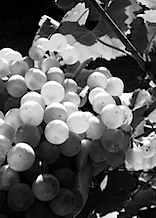
 The obvious reason is because it’s not made in Champagne, France. Then, Prosecco wine is made from the grape Prosecco (now named Glera), and not from Chardonnay, Pinot Noir, Pinot Blanc, and/or any of the other varieties used in Champagne — none of which are Prosecco/glera. Most importantly, however: these sparklers are produced using two completely different methods: one short and efficient, the other long, complicated, more labor intensive, producing a more complex wine. The results are two very different sparklers, each to be enjoyed and appreciated for its own merits.
See if the following, somewhat over-simplified explanation helps clarify things a bit.
Bubble, bubble, toil and trouble.
For both types, we’ll start with a still wine that’s highly acidic, created especially to be undergo a second, induced fermentation.
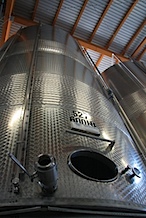
In one method, a yeast/sugar concoction is added to the still wine stored in large stainless steel tanks, or vats. These tanks are sealed for the second fermentation, however, trapping the resulting carbonation in the wine. It will remain in the vats for three months or more (depending on a variety of factors), and remian under pressure continually even as it is bottled. The resulting spumante will be ready for consumption from about six to twelve months later.
 In the second method, the specially formulated mixture is again added to a still wine. It will not remain in vats, however, but will be bottled and capped (not yet corked) for the second fermentation which will take place inside each individual bottle. For the next eighteen to thirty-six months, the bottles are regularly rotated (manually or mechanically) and gradually up-ended, shuttling the spent yeast (the lees) down into the cap in the process. At the end of this refining process, the neck is flash frozen, the cap is removed, and the now-solid lees pop from the pressure. The bottle is immediately topped off, corked, and packaged for retail — although it will still be a minimum of six months before it should be drunk (it’s recovering from the shock, you see). Sparkling wines produced this way also have a much longer “shelf life.”
Which is which, then?
The first method is called Charmat, or Martinotti after the men who created/established the process; the second, champagnoise — or in Italy, metodo classico, the classic method. The choice of method depends on a multitude of factors, not the least of which is the variety itself; in any case there is no shortage of bollicine, or spumanti (the term that refers to any sparkling wine), both established and innovative, being brought to life from regional varieties throughout the country.
 This is very good news, and offers us the opportunity to become quite adventurous in our sparkling explorations. Do your own taste tests. The next time you have a dinner party, have the local wine expert help you select both a Prosecco (Foss Marai, a Cartizze, perhaps?) or other “Charmat” along with an Italian metodo classico: a Lombardia Gatti Franciacorta, a Piedmont Gavi Soldati di Scolca, a Balter from Trentino. As you sip each, see what you find different…and the same…between them, in the visual, the nose, and in the taste. The goal is not to look for which method is “better;” but instead to identify the distinctive qualities of each — with the enjoyment of the wines, the meal, and the company taking priority always, of course!
The truth is, Prosecco will always remind us of Champagne…and it’s fine to say so. But now, the next time you head for your local enoteca to choose a sparkler, you’ll have no problem chatting up the wine expert and selecting just the right sparkler for the occasion. And remember, it’s not just for New Year’s anymore…
Salut!
___
* Prosecco has also become popular enough to be ripped off, evidently: there are reports that only one in ten versions of wine sold as “Prosecco” is produced in Italy – e questo non si fa, that will simply not do. To control this menace, as of the 2009 harvest, the Prosecco produced under either of two new DOCG classifications
- Prosecco Conegliano-Valdobbiadene
- Prosecco Montello-Colli Asolani
or under the larger Prosecco DOC zone will guarantee you of its rightful Veneto origin. To complicate things further, the Prosecco variety will now be called Glera…but that’s a whole other post…
___
photo credit, last image: Luca Fabbian.


 The Basilica di San Marco is certainly one of Venice’s don’t-miss sites: the interior, 8,500 square meters of gold mosaics recounting the story of Venice’s patron saint (whose remains, after being misplaced…twice, reside in the crypt), is like so much of Venice, impossible to imagine – it must be seen. The result of its popularity, however, is that the line to enter can be daunting in length, frequently extending well into the piazzetta. It does move quickly, but if the weather’s intemperate, the wait can seem eternal.
 you’re permitted no backpacks or other bags. You may leave them at the nearby Ateneo San Basso, which faces the left side of the Basilica (just beyond the two lion statues).


 The Municipalità Lido-Pellestrina

